


Breakthrough Cancer Treatment: Scientists Create Cancer-Fighting Cells Inside the Body
 26 March,2026
Read More
26 March,2026
Read More


Enquire now in case of any assistance needed
22 July,2025
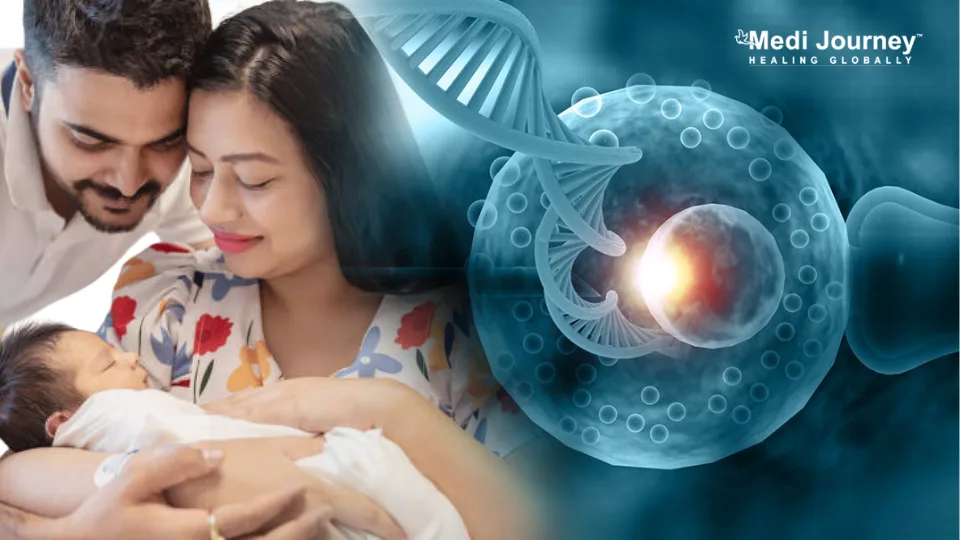
In recent years, advanced fertility treatments in India have significantly evolved, offering new hope to couples struggling with infertility. With the rise of world-class embryology labs in India, state-of-the-art technologies, such as ICSI treatment in India and PGT India in IVF, are transforming reproductive care. These advanced techniques are beneficial for individuals dealing with complex fertility issues, such as severe male factor infertility, recurrent IVF failure, or genetic disorders.
This blog explores the workings of advanced IVF techniques, their benefits, and why India has emerged as a global leader in affordable and effective fertility care.
Fill up the form and get assured assitance within 24 hrs!
In vitro fertilization (IVF) has been available in India since the 1980s, but the introduction of ICSI (Intracytoplasmic Sperm Injection) and PGT (Preimplantation Genetic Testing) has made it possible to diagnose and treat even the most challenging infertility cases.
Modern Indian fertility clinics now combine clinical excellence with advanced technologies to improve success rates and patient outcomes.
Get help choosing the best doctor and hospital for your care.
ICSI (Intracytoplasmic Sperm Injection) is one of the most widely used advanced fertility treatments in India, especially in cases of male infertility.
Unlike traditional IVF, where sperm and eggs are combined in a petri dish and allowed to fertilize naturally, ICSI involves injecting a single, healthy sperm directly into a mature egg.
ICSI has revolutionized male infertility care and is now standard in many Indian IVF protocols. The availability of ICSI treatment in India has made high-quality care more accessible to a wider population due to its affordability, which is comparable to that in Western countries.
The success of ICSI and PGT heavily depends on the quality of embryology labs in India. These labs must maintain highly controlled environments to support fertilization, embryo culture, and genetic testing.
Certified embryologists in India are often trained internationally, ensuring high laboratory standards and the precise execution of complex procedures, such as ICSI and PGT.
Get help choosing the best doctor and hospital for your care.
Preimplantation Genetic Testing (PGT) is a technique that examines embryos for genetic abnormalities before implantation. This ensures that only healthy, chromosomally normal embryos are transferred into the uterus. PGT in IVF has become increasingly common among patients with:
With an increasing number of accredited genetic laboratories and specialized embryology labs in India, PGT in IVF is now more reliable, faster, and cost-effective than ever.
When combined, ICSI and PGT offer powerful advantages in embryo selection. ICSI ensures the highest chance of fertilization, while PGT helps identify the healthiest embryos for transfer. This combination significantly increases the likelihood of a successful, full-term pregnancy.
Steps in the Combined IVF + ICSI + PGT Process:
Get help choosing the best doctor and hospital for your care.
India is known for providing high-quality fertility care at a lower cost compared to Western countries.
|
Procedure |
Estimated Cost (USD) |
|
Standard IVF Cycle |
2,000 USD – 3,000 USD |
|
IVF + ICSI |
3,000 USD– 4,500 USD |
|
PGT (per embryo) |
200 USD – 400 USD |
|
Full IVF + ICSI + PGT Package |
4,000 USD – 6,000 USD |
Many clinics also offer package deals that include consultation, diagnostics, medication, laboratory procedures, embryo freezing, and follow-up care.
The success of advanced fertility treatments in India depends on factors such as age, underlying medical conditions, and the quality of the fertility lab. However, when ICSI is combined with PGT, the chances of a healthy pregnancy increase significantly.
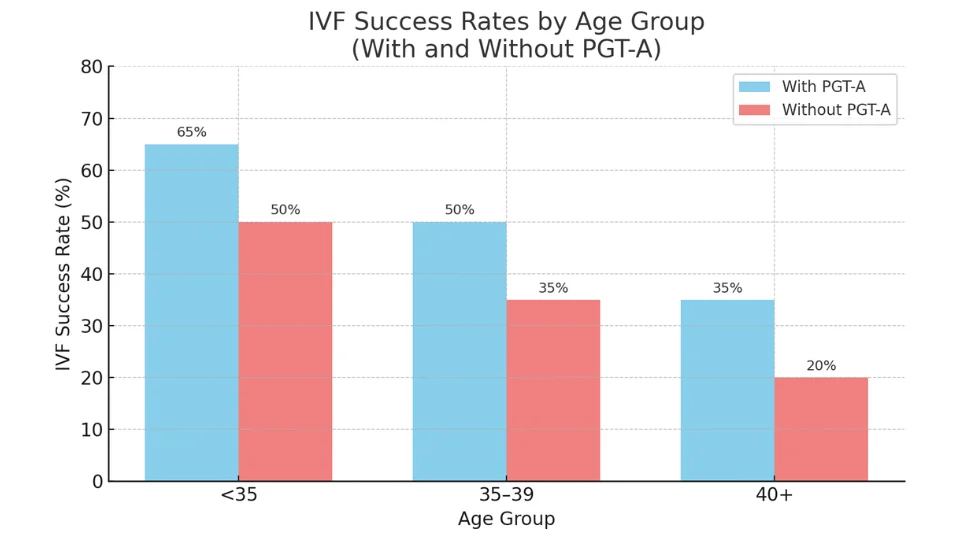
This chart highlights how PGT-A significantly improves IVF success rates, especially in women over 35. It ensures chromosomally normal embryos are transferred, reducing the chances of miscarriage and increasing the likelihood of a full-term pregnancy.
Get help choosing the best doctor and hospital for your care.
Historically, IVF and fertility treatments were not covered by most health insurance policies in India. However, some private insurers now offer limited coverage, usually as part of premium plans or maternity add-ons.
Coverage varies widely: some plans may include partial IVF benefits, while others exclude it entirely. Even with coverage, waiting periods, caps, and exclusions are common. It’s crucial to review your policy carefully to understand what’s included.
For those without insurance coverage, many clinics also offer EMI plans or financing options to make treatment more accessible.
India has rapidly advanced fertility clinics, making it a global destination for couples seeking effective, affordable, and reliable reproductive care. Techniques like ICSI treatment in India and PGT India in IVF are no longer experimental; they are well-established components of a modern fertility journey. With world-class embryology labs in India and experienced reproductive specialists, success rates continue to rise, giving couples renewed hope for building families.
The advanced fertility treatments in India now provide the best solutions to the people who are facing male infertility, advanced maternal age, or recurrent IVF failure.
Fill up the form and get assured assitance within 24 hrs!
B.Sc in Media Science from NSHM Knowledge Campus, Kolkata, 2019-2022
Suryani Dutta is an experienced healthcare content writer with 4+ years of experience creating patient-centric healthcare content. She has developed over 2,000 blogs and web pages, 2,000+ social media creatives, 200+ video scripts, and hundreds of SEO-opt
Dr. Parul Katiyar is a renowned and experienced IVF Specialist with an experience of 21 years. Her expertise encompasses a wide range of areas including PCOS, Reproductive Endocrine disorders, Male infertility, Endometriosis, Fertility Preservation, ICSI...
Senior Consultant
Medical Oncologist
Nanavati Max Super Speciality Hospital Mumbai
WhatsApp UsSenior Director
Gynecologist and Obstetrician, IVF Specialist
Max Super Speciality Hospital, Shalimar Bagh, New Delhi
WhatsApp UsSenior Director
Gynecologist and Obstetrician, IVF Specialist
Max Smart Super Speciality Hospital, Saket, New Delhi
WhatsApp UsSenior Director
Gynecologist and Obstetrician
Max Smart Super Speciality Hospital, Saket, New Delhi
WhatsApp UsSenior Director
Gynecologist and Obstetrician
Max Smart Super Speciality Hospital, Saket, New Delhi
WhatsApp UsSenior Director
Gynecologist and Obstetrician
Max Smart Super Speciality Hospital, Saket, New Delhi
WhatsApp UsThe Art of Effective Communication
04 February,2026
Read More
02 February,2026
Read More
27 January,2026
Read More
20 January,2026
Read More
Trusted by Patients
"I am Asim from Bangladesh and was looking for treatment in India for neuro. I visited many websites to get the complete information regarding the treatment but I was not satisfied as I was getting confused. In the meanwhile, one of my friends suggested I seek help from Medi Journey as he experienced his medical journey very smoothly and was satisfied with it. They have filtered the top 10 doctors as per experience, the success rate of surgery & profile, so it helps us to choose the best treatment in India. "
"For my knee surgery, Medi Journey guided me to BLK Hospital where I received exceptional care. The team's support and the expertise at BLK Hospital exceeded my expectations. Thank you Medi Journey for making my medical journey stress-free. "
"I came from Iraq for my granddaughter's eye surgery in India facilitated by Medi Journey, due to critical cases they advised us to get a second opinion from the different hospitals before going to surgery. Finally, we went to Fortis Escort Hospital, which helped us to get more confidence for diagnosis. Fortis Escort Hospital has the best eye surgeon team with the latest instruments. Thanks to all team members for providing a high-quality treatment in India at an affordable cost. "
"I came for my hair transplant in India, before coming I was so confused about choosing the best clinic and surgeon for me. But thanks to God one of my friends had a hair transplant in India through Medi Journey. He recommended me to go with them. I am completely happy with my experience with them. They were always very fast in their responses to me. the success rate of my hair transplant surgery is 100%."
"Artemis Hospital, suggested by Medi Journey, turned out to be a great choice for my treatment. The personalized assistance and medical care were exceptional. I'm grateful to Medi Journey for guiding me to a hospital that perfectly matched my needs. Highly recommended! "
"I came from Afghanistan for my treatment in India at Jaypee Hospital, Noida. I had a fantastic experience with Medi Journey. Kudos to them for their incredible support during my medical journey. They not only took care of all the logistics but also connected me with a fantastic healthcare team. Efficient, caring, and highly recommended for a hassle-free medical tourism experience."
"I am Adam from Kano, Nigeria, one of my friends from Nigeria was facilitated by Medi Journey, and he recommended us to go with them. I sent my all reports to them and within 48 hours they reverted with 4 options from different hospitals. They helped me to get a Visa letter from the hospital, arrange pick-up from the airport, and book a hotel for me. Their team is very honest and throughout our stay in India they are with us they are caring for us like his family members. BLK Hospital is the best hospital in India with a top surgical oncologist surgeon team, a very advanced OT, and a Radiotherapy department. I wish more success to Medi Journey. "
"Great experience at the Max Hospital for my spine surgery and was successfully done. I thank my neurosurgeon and his entire team. I recommended all of my country's people to Medi Journey for treatment in India, they choose the best hospital, the best doctors, and the best cost for patients."
"I came to India from Dhaka, Bangladesh for my father-in-law's cardiac surgery at Fortis Hospital. I was confused about choosing the best surgeon for him before coming, but their team helped me to choose the best hospital and best cardiac surgeon in India with very good cost and 100% success rate of surgery. I am very happy with the services, really they make my journey so comfortable that make me feel at home. Thanks again and I like people to choose "Medi Journey" as your travel guide. "
"I am Mohammad from Bangladesh came to India for my general health checkup. Medi Journey offers me the complete package including Pick-up from the airport, hotel services, and 24-hour assistance. They guide you to choose the best hospital in India, the best cost of treatment with top-most doctors and give you complete information about hotel booking, and pick-up from the airport before coming to India They have the best team to help. Always choose Medi Journey for your treatment in India."