


Breakthrough Cancer Treatment: Scientists Create Cancer-Fighting Cells Inside the Body
 26 March,2026
Read More
26 March,2026
Read More


Enquire now in case of any assistance needed
26 March,2026
For decades, cancer treatment has relied on surgery, chemotherapy, and radiation. While effective, these approaches often come with significant side effects and limitations.
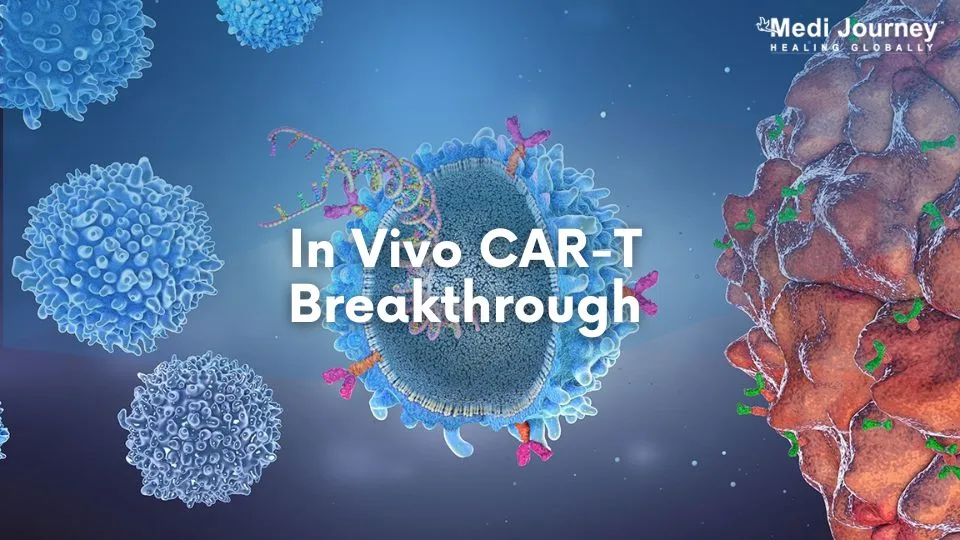
In recent years, immunotherapy, especially CAR-T cell therapy, has transformed outcomes for certain cancers. But now, a breakthrough could push the field even further.
Scientists have developed a method to engineer cancer-fighting immune cells directly inside the patient’s body, potentially eliminating the need for complex laboratory procedures.
This innovation is being described as one of the most promising advancements in modern oncology.
Fill up the form and get assured assitance within 24 hrs!
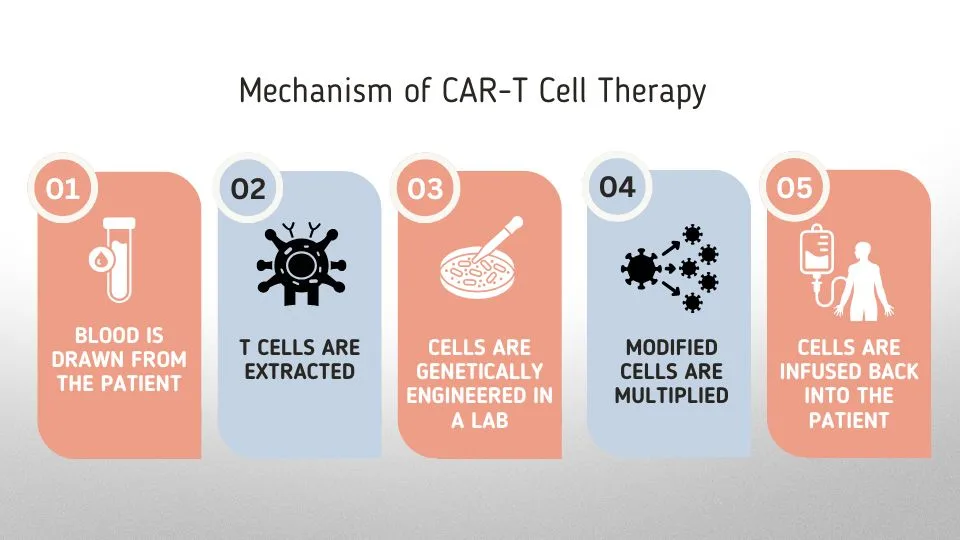
CAR-T cell therapy (Chimeric Antigen Receptor T-cell therapy) is a personalized cancer treatment that modifies a patient’s immune system to target cancer cells.
How Traditional CAR-T Therapy Works
Once inside the body, these engineered T cells identify and destroy cancer cells.
Proven Success
CAR-T therapy has shown remarkable results in:
In some cases, patients with no other options have achieved long-term remission.
Get help choosing the best doctor and hospital for your care.
Despite its success, CAR-T therapy faces critical challenges:
1. Extremely High Cost
Treatment can cost $400,000+, making it inaccessible for many patients globally.
2. Complex Manufacturing Process
3. Limited Availability
Only a few advanced centers worldwide can offer this therapy.
4. Not Effective for All Cancers
5. Safety Concerns
These barriers highlight the need for a simpler, scalable alternative.
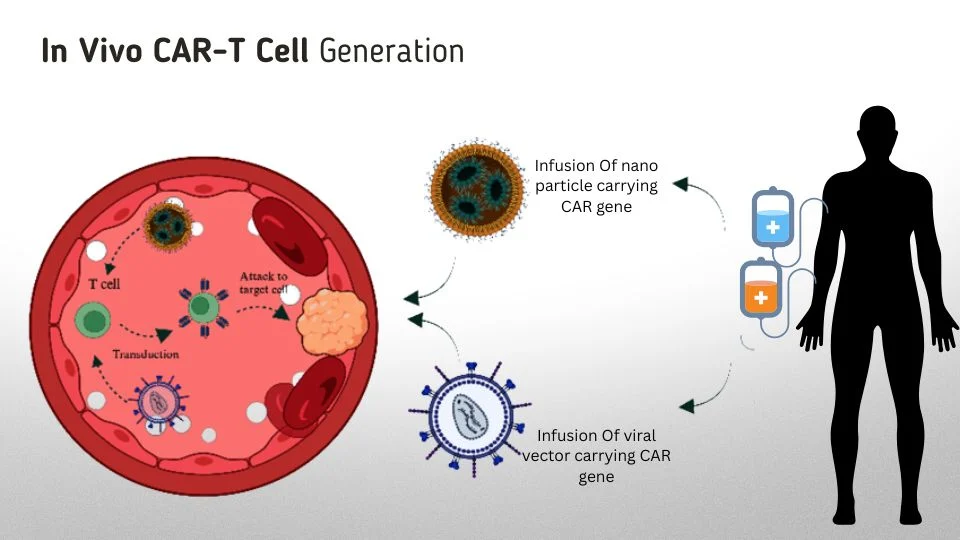
Researchers from the University of California, San Francisco (UCSF), along with collaborating institutions, have developed a novel approach to generate CAR-T cells inside the body (in vivo).
Instead of extracting and modifying cells externally, this approach:
This eliminates the need for lab-based cell engineering.
Get help choosing the best doctor and hospital for your care.
The innovation relies on targeted gene delivery systems.
Step-by-Step Mechanism
Why This Is Revolutionary
The study, published in Nature, demonstrates a highly precise gene-editing strategy.
Key Scientific Innovations
This level of precision is critical for safety and long-term effectiveness.
Get help choosing the best doctor and hospital for your care.
Preclinical studies (animal models) showed highly promising outcomes:
Blood Cancers
Solid Tumors
Speed of Response
Performance Comparison
This innovation could address several major challenges in cancer care, including:
1. Drastically Lower Costs
Removing lab manufacturing could dramatically reduce treatment costs.
2. Faster Treatment Access
Patients could receive therapy within days instead of weeks.
3. Expanded Global Availability
Hospitals without advanced biotech labs could offer treatment.
4. Improved Patient Experience
5. Scalability
This method could bring advanced immunotherapy to millions of patients worldwide.
Get help choosing the best doctor and hospital for your care.
Safety remains a critical consideration.
Potential Risks
What Researchers Are Doing
Currently, this therapy is not yet available for patients.
Current Status
However, traditional CAR-T therapy is available in:
Medijourney can help patients explore these options globally.
Get help choosing the best doctor and hospital for your care.
This breakthrough signals a shift toward:
In Vivo Therapies
Treatments created inside the body rather than in labs.
Personalized Medicine at Scale
Tailored therapies without complex infrastructure.
Expansion to More Cancers
Including solid tumors like:
Combination Therapies
Pairing in vivo CAR-T with:
Many scientists believe this innovation could:
If successful in humans, this could become one of the most important milestones in oncology.
Get help choosing the best doctor and hospital for your care.
The ability to create cancer-fighting cells directly inside the body represents a paradigm shift in medicine.
While more research is needed, this innovation has the potential to:
For patients and families navigating cancer, this breakthrough offers something invaluable: hope backed by science.
Primary Study (Nature Journal):
Nyberg W., Bernard P.L., et al. (2026)
In vivo generation of CAR-T cells for cancer therapy
Published in Nature
Institutional Source:
University of California, San Francisco (UCSF)
Fill up the form and get assured assitance within 24 hrs!
B.Sc in Media Science from NSHM Knowledge Campus, Kolkata, 2019-2022
Suryani Dutta is an experienced healthcare content writer with 4+ years of experience creating patient-centric healthcare content. She has developed over 2,000 blogs and web pages, 2,000+ social media creatives, 200+ video scripts, and hundreds of SEO-opt
Dr. Vivek Gupta is an experienced Surgical Oncologist with over 16 years of practice....
Senior Consultant
Medical Oncologist
Nanavati Max Super Speciality Hospital Mumbai
WhatsApp UsSenior Director
Gynecologist and Obstetrician, IVF Specialist
Max Super Speciality Hospital, Shalimar Bagh, New Delhi
WhatsApp UsSenior Director
Gynecologist and Obstetrician, IVF Specialist
Max Smart Super Speciality Hospital, Saket, New Delhi
WhatsApp UsSenior Director
Gynecologist and Obstetrician
Max Smart Super Speciality Hospital, Saket, New Delhi
WhatsApp UsSenior Director
Gynecologist and Obstetrician
Max Smart Super Speciality Hospital, Saket, New Delhi
WhatsApp UsSenior Director
Gynecologist and Obstetrician
Max Smart Super Speciality Hospital, Saket, New Delhi
WhatsApp UsThe Art of Effective Communication
04 February,2026
Read More
02 February,2026
Read More
27 January,2026
Read More
20 January,2026
Read More
Trusted by Patients
"I am Asim from Bangladesh and was looking for treatment in India for neuro. I visited many websites to get the complete information regarding the treatment but I was not satisfied as I was getting confused. In the meanwhile, one of my friends suggested I seek help from Medi Journey as he experienced his medical journey very smoothly and was satisfied with it. They have filtered the top 10 doctors as per experience, the success rate of surgery & profile, so it helps us to choose the best treatment in India. "
"For my knee surgery, Medi Journey guided me to BLK Hospital where I received exceptional care. The team's support and the expertise at BLK Hospital exceeded my expectations. Thank you Medi Journey for making my medical journey stress-free. "
"I came from Iraq for my granddaughter's eye surgery in India facilitated by Medi Journey, due to critical cases they advised us to get a second opinion from the different hospitals before going to surgery. Finally, we went to Fortis Escort Hospital, which helped us to get more confidence for diagnosis. Fortis Escort Hospital has the best eye surgeon team with the latest instruments. Thanks to all team members for providing a high-quality treatment in India at an affordable cost. "
"I came for my hair transplant in India, before coming I was so confused about choosing the best clinic and surgeon for me. But thanks to God one of my friends had a hair transplant in India through Medi Journey. He recommended me to go with them. I am completely happy with my experience with them. They were always very fast in their responses to me. the success rate of my hair transplant surgery is 100%."
"Artemis Hospital, suggested by Medi Journey, turned out to be a great choice for my treatment. The personalized assistance and medical care were exceptional. I'm grateful to Medi Journey for guiding me to a hospital that perfectly matched my needs. Highly recommended! "
"I came from Afghanistan for my treatment in India at Jaypee Hospital, Noida. I had a fantastic experience with Medi Journey. Kudos to them for their incredible support during my medical journey. They not only took care of all the logistics but also connected me with a fantastic healthcare team. Efficient, caring, and highly recommended for a hassle-free medical tourism experience."
"I am Adam from Kano, Nigeria, one of my friends from Nigeria was facilitated by Medi Journey, and he recommended us to go with them. I sent my all reports to them and within 48 hours they reverted with 4 options from different hospitals. They helped me to get a Visa letter from the hospital, arrange pick-up from the airport, and book a hotel for me. Their team is very honest and throughout our stay in India they are with us they are caring for us like his family members. BLK Hospital is the best hospital in India with a top surgical oncologist surgeon team, a very advanced OT, and a Radiotherapy department. I wish more success to Medi Journey. "
"Great experience at the Max Hospital for my spine surgery and was successfully done. I thank my neurosurgeon and his entire team. I recommended all of my country's people to Medi Journey for treatment in India, they choose the best hospital, the best doctors, and the best cost for patients."
"I came to India from Dhaka, Bangladesh for my father-in-law's cardiac surgery at Fortis Hospital. I was confused about choosing the best surgeon for him before coming, but their team helped me to choose the best hospital and best cardiac surgeon in India with very good cost and 100% success rate of surgery. I am very happy with the services, really they make my journey so comfortable that make me feel at home. Thanks again and I like people to choose "Medi Journey" as your travel guide. "
"I am Mohammad from Bangladesh came to India for my general health checkup. Medi Journey offers me the complete package including Pick-up from the airport, hotel services, and 24-hour assistance. They guide you to choose the best hospital in India, the best cost of treatment with top-most doctors and give you complete information about hotel booking, and pick-up from the airport before coming to India They have the best team to help. Always choose Medi Journey for your treatment in India."