

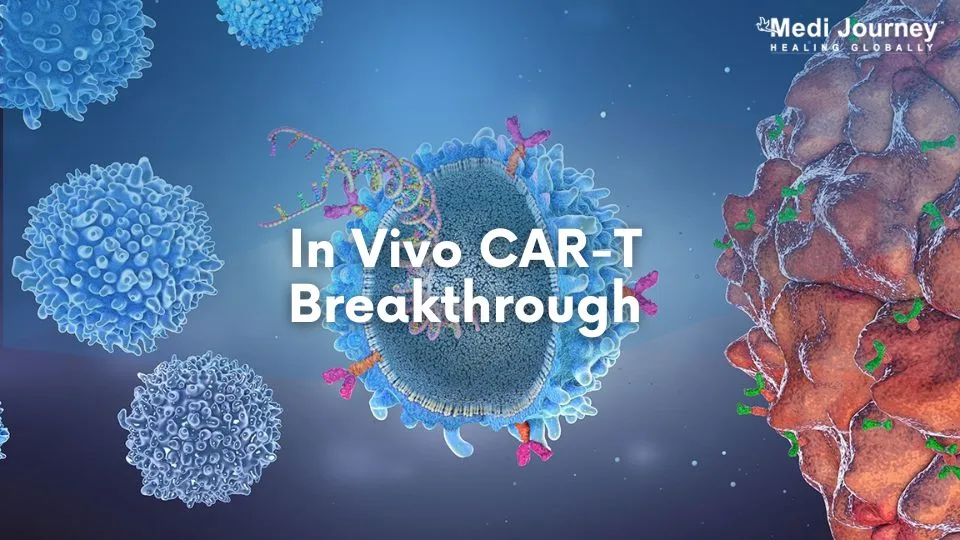
Breakthrough Cancer Treatment: Scientists Create Cancer-Fighting Cells Inside the Body
 26 March,2026
Read More
26 March,2026
Read More


Enquire now in case of any assistance needed
10 July,2025
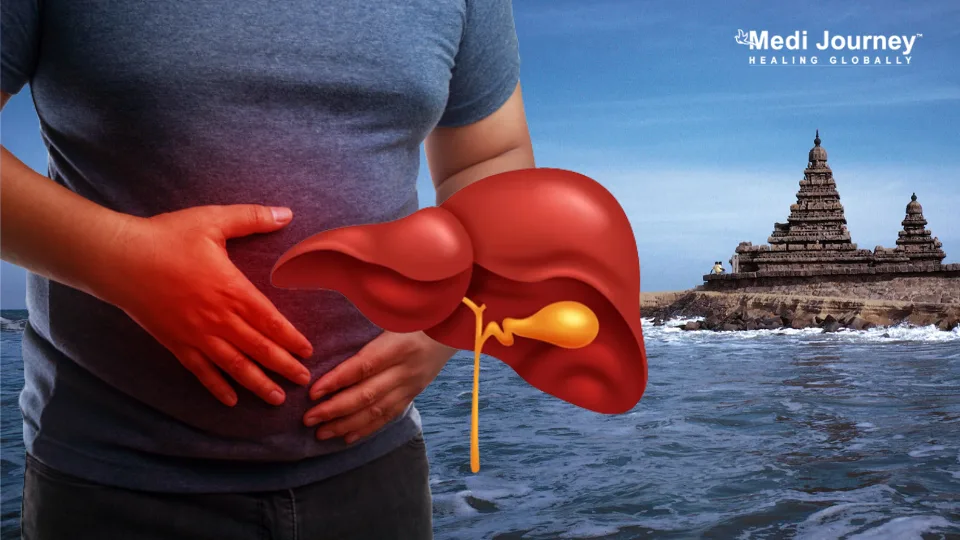
Chennai has earned its reputation as the "Health Capital of India" due to its exceptional medical facilities and expertise. The city offers some of the country's most advanced hepatology care programs. These range from high-volume public centers to cutting-edge private institutes.
If you're considering a liver transplant procedure in Chennai, this guide covers what to expect at each stage. We'll walk you through the entire process with real-world context, costs, and city-specific advantages. You'll also learn about living donor liver transplants, as well as post-liver transplant recovery in India. We'll show how Chennai's healthcare ecosystem supports patients throughout their journey.
Fill up the form and get assured assitance within 24 hrs!
Chennai provides world-class transplant options:
These centers work closely with Tamil Nadu's organ-donation authority (TRANSTAN). They also coordinate with NGOs, such as the MOHAN Foundation. This collaboration enables better cadaver-donor availability and rapid "green corridor" organ transport.
Private hospitals charge around INR 10–25 lakh (approximately 12,000–30,000 USD) for a liver transplant procedure in Chennai. Government hospitals, such as Stanley Medical College and Government General Hospital, offer subsidized procedures. These typically cost around INR 5 lakh (about 6,000 USD), though wait times are longer. Many families benefit from state programs such as Kalaignar Kapitu Thittam. This program operates under the Chief Minister's Health Insurance Scheme.
The evaluation process includes several key assessments. These cover blood typing, imaging, and cardiac and pulmonary fitness tests. Living-donor cases usually involve relatives and require additional clearances. Both legal and psychological evaluations are mandatory. Tamil Nadu maintains strict brain-death protocols and cadaver-donor laws. These ensure both speed and transparency in the process.
In this procedure, a donor gives a liver segment. The donor is often a spouse or child. Surgeons commonly use the right lobe, which represents 55–70% of the liver. The donor's liver regenerates within weeks. The recipient's graft adapts over several months. Recent innovations include laparoscopic donor hepatectomies. Gleneagles reports minimal scarring and 5-day discharge times with this technique. Rela Hospital has pioneered immune-preserving pediatric robotic transplants in 2025.
Get help choosing the best doctor and hospital for your care.
Surgeons perform the transplant under general anesthesia. Open transplants require an abdominal incision. Advanced centers now use robotic or laparoscopic techniques on donors. These newer methods reduce blood loss and complications. Multidisciplinary teams handle each procedure. These teams include HPB surgeons, hepatologists, anesthetists, and intensivists. Many are trained at the Rela or Gleneagles facilities.
ICU-level monitoring begins immediately after surgery. Green corridors transport cadaver organs within minutes. This system represents an enduring Tamil Nadu innovation. Rela and Gleneagles have pioneered several advanced techniques. These include split, auxiliary, and pediatric liver transplants. Some of these procedures were among the first in Asia.
Adult transplants typically last between 6 and 12 hours. Pediatric and living-donor surgeries follow similar standards of care. For example, robotic pediatric cases use less invasive surgical steps. Gleneagles' laparoscopic donor surgery typically takes eight hours to complete.
Recipients usually stay in the ICU for 4–6 days. Donors typically need 3–5 days of intensive care. Total hospitalization spans roughly 2–4 weeks. The exact duration depends on the graft function and any complications that may arise. Regular lab tests, ultrasounds, and immunosuppressants are initiated immediately after surgery.
Muscle loss is common before and after transplant. Hepatology care in Chennai typically begins with rehabilitation that lasts 6–12 months. Nutritionists create liver-friendly diets for each patient. These work in conjunction with physiotherapy programs to restore strength.
Many families prepare their homes for recovery. They convert one room into a "mini-ICU" with strict hygiene protocols in place. This includes controlled visitors and timed medications. Lifelong immunosuppressants protect against rejection. Side effects can include hypertension, infection risk, and bone thinning.
Follow-up schedules vary by recovery stage. Early months require weekly or monthly visits. Later appointments become quarterly or yearly. CTS and Kauvery emphasize lifestyle counseling during hospital stays. Most patients return to work within 3 to 6 months. Pediatric recipients often resume schooling within 3–4 months.
The recovery phase depends on coordinated support systems. Family, physicians, and NGOs all play essential roles. The MOHAN Foundation tracks follow-ups on cadaver donations. Support groups operate in hospitals in Chennai and through online forums. These groups share valuable information about costs, donor evaluations, and post-operative tips.
Get help choosing the best doctor and hospital for your care.
The Rela Institute reports an approximately 99% survival rate. This significantly exceeds the global average of around 90%. Minimally invasive techniques reduce donor complications. They also decrease pain and recovery time. High surgical volumes contribute to Chennai's leadership. Stringent infection control and multidisciplinary teams also play crucial roles.

This chart compares liver transplant survival rates, showing Chennai (Rela Institute) at 99%, outperforming the global average of 90%.
Tamil Nadu leads India with a 1.8 per million deceased donor rate. The state maintains strict cadaver-transplant laws and rapid green corridors. These systems save lives by efficiently allocating organs. The Kalaignar scheme ensures that low-income families can access transplantation services.
The liver transplant procedure in the Chennai ecosystem is both robust and patient-centered. The city excels in living donor liver transplant procedures, as well as comprehensive post-liver transplant recovery programs. Robotic and laparoscopic innovations back these advanced treatments.
Chennai delivers exceptional hepatology care through leading centers. Rela, Gleneagles, CTS, and Kauvery provide elite medical outcomes. They also offer comprehensive post-operative services and diverse financial pathways.
Why Chennai?
Choosing Chennai for this journey means receiving expert care in a trusted city. The city has built its reputation on transparency and excellence in transplantation. This support system helps patients before, during, and long after surgery.
If you are looking for reputable doctors and hospitals in Chennai for you and your loved ones, we at MediJourney can assist you with the process. Contact us to know more.
Fill up the form and get assured assitance within 24 hrs!
B.Sc in Media Science from NSHM Knowledge Campus, Kolkata, 2019-2022
Suryani Dutta is an experienced healthcare content writer with 4+ years of experience creating patient-centric healthcare content. She has developed over 2,000 blogs and web pages, 2,000+ social media creatives, 200+ video scripts, and hundreds of SEO-opt
Director
Hepatologist, HPB and Liver Transplant Surgeon, Surgical Gastroenterologist
Aakash Healthcare Super Speciality Hospital, Dwarka, New Delhi
Dr. Ajitabh Srivastava is one of the best Hepatologists, Surgical Gastroenterologists, and Liver Transplant Surgeons in New Delhi. With over 26 years of experience, he has performed over 2500 liver transplant procedures. He specializes in hepato-pancreato-biliary (HPB) surgery, gastrointestinal surgery, acute liver failure treatment, laparoscopic surgery, and gall bladder surgery....
Senior Consultant
Medical Oncologist
Nanavati Max Super Speciality Hospital Mumbai
WhatsApp UsSenior Director
Gynecologist and Obstetrician, IVF Specialist
Max Super Speciality Hospital, Shalimar Bagh, New Delhi
WhatsApp UsSenior Director
Gynecologist and Obstetrician, IVF Specialist
Max Smart Super Speciality Hospital, Saket, New Delhi
WhatsApp UsSenior Director
Gynecologist and Obstetrician
Max Smart Super Speciality Hospital, Saket, New Delhi
WhatsApp UsSenior Director
Gynecologist and Obstetrician
Max Smart Super Speciality Hospital, Saket, New Delhi
WhatsApp UsSenior Director
Gynecologist and Obstetrician
Max Smart Super Speciality Hospital, Saket, New Delhi
WhatsApp UsThe Art of Effective Communication
04 February,2026
Read More
02 February,2026
Read More
27 January,2026
Read More
20 January,2026
Read More
Trusted by Patients
"I am Asim from Bangladesh and was looking for treatment in India for neuro. I visited many websites to get the complete information regarding the treatment but I was not satisfied as I was getting confused. In the meanwhile, one of my friends suggested I seek help from Medi Journey as he experienced his medical journey very smoothly and was satisfied with it. They have filtered the top 10 doctors as per experience, the success rate of surgery & profile, so it helps us to choose the best treatment in India. "
"For my knee surgery, Medi Journey guided me to BLK Hospital where I received exceptional care. The team's support and the expertise at BLK Hospital exceeded my expectations. Thank you Medi Journey for making my medical journey stress-free. "
"I came from Iraq for my granddaughter's eye surgery in India facilitated by Medi Journey, due to critical cases they advised us to get a second opinion from the different hospitals before going to surgery. Finally, we went to Fortis Escort Hospital, which helped us to get more confidence for diagnosis. Fortis Escort Hospital has the best eye surgeon team with the latest instruments. Thanks to all team members for providing a high-quality treatment in India at an affordable cost. "
"I came for my hair transplant in India, before coming I was so confused about choosing the best clinic and surgeon for me. But thanks to God one of my friends had a hair transplant in India through Medi Journey. He recommended me to go with them. I am completely happy with my experience with them. They were always very fast in their responses to me. the success rate of my hair transplant surgery is 100%."
"Artemis Hospital, suggested by Medi Journey, turned out to be a great choice for my treatment. The personalized assistance and medical care were exceptional. I'm grateful to Medi Journey for guiding me to a hospital that perfectly matched my needs. Highly recommended! "
"I came from Afghanistan for my treatment in India at Jaypee Hospital, Noida. I had a fantastic experience with Medi Journey. Kudos to them for their incredible support during my medical journey. They not only took care of all the logistics but also connected me with a fantastic healthcare team. Efficient, caring, and highly recommended for a hassle-free medical tourism experience."
"I am Adam from Kano, Nigeria, one of my friends from Nigeria was facilitated by Medi Journey, and he recommended us to go with them. I sent my all reports to them and within 48 hours they reverted with 4 options from different hospitals. They helped me to get a Visa letter from the hospital, arrange pick-up from the airport, and book a hotel for me. Their team is very honest and throughout our stay in India they are with us they are caring for us like his family members. BLK Hospital is the best hospital in India with a top surgical oncologist surgeon team, a very advanced OT, and a Radiotherapy department. I wish more success to Medi Journey. "
"Great experience at the Max Hospital for my spine surgery and was successfully done. I thank my neurosurgeon and his entire team. I recommended all of my country's people to Medi Journey for treatment in India, they choose the best hospital, the best doctors, and the best cost for patients."
"I came to India from Dhaka, Bangladesh for my father-in-law's cardiac surgery at Fortis Hospital. I was confused about choosing the best surgeon for him before coming, but their team helped me to choose the best hospital and best cardiac surgeon in India with very good cost and 100% success rate of surgery. I am very happy with the services, really they make my journey so comfortable that make me feel at home. Thanks again and I like people to choose "Medi Journey" as your travel guide. "
"I am Mohammad from Bangladesh came to India for my general health checkup. Medi Journey offers me the complete package including Pick-up from the airport, hotel services, and 24-hour assistance. They guide you to choose the best hospital in India, the best cost of treatment with top-most doctors and give you complete information about hotel booking, and pick-up from the airport before coming to India They have the best team to help. Always choose Medi Journey for your treatment in India."