


Breakthrough Cancer Treatment: Scientists Create Cancer-Fighting Cells Inside the Body
 26 March,2026
Read More
26 March,2026
Read More


Enquire now in case of any assistance needed
23 July,2025
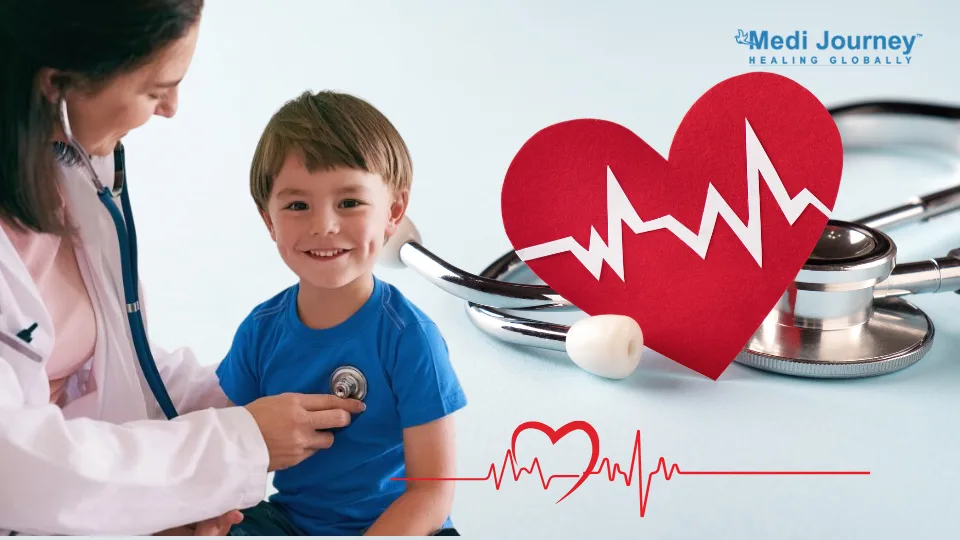
India’s healthcare landscape has undergone significant changes over the past two decades. Among the standout areas of progress is pediatric cardiology in India, a highly specialized field that has become a beacon of hope for children born with congenital heart defects. Once limited to a few urban hospitals, specialized cardiac care for infants and children is now available across several regions, backed by state-of-the-art infrastructure, expert clinicians, and a growing network of child-centered care programs.
This blog takes a detailed look at how India has positioned itself as a leader in offering advanced, compassionate, and accessible care for young cardiac patients.
Fill up the form and get assured assitance within 24 hrs!
Congenital heart defects (CHDs) affect nearly 8 out of every 1,000 live births globally. India, with over 25 million births annually, is estimated to have more than 2,00,000 new cases of CHDs every year. These numbers underscore the need for a robust, responsive, and scalable healthcare system that can diagnose and treat such conditions early in life.
Pediatric cardiology in India has grown to meet this demand. From early detection during pregnancy to complex surgeries in infancy, Indian hospitals now offer a full spectrum of services under one roof.
Get help choosing the best doctor and hospital for your care.
Accurate diagnosis is the cornerstone of effective treatment for congenital heart conditions. India has seen vast improvements in prenatal screening through fetal echocardiography. Performed between the 18th and 24th week of gestation, these tests can detect major heart defects, giving doctors and parents a chance to prepare well in advance.
Post-birth, hospitals equipped with neonatal and pediatric echocardiography, CT scans, and cardiac MRIs can pinpoint the exact nature of the defect. Early diagnosis improves survival rates significantly and helps clinicians plan appropriate interventions.
Whether it’s a ventricular septal defect or a more complex issue like hypoplastic left heart syndrome, congenital heart defect treatment in India begins with accurate and timely diagnosis. Leading hospitals have dedicated pediatric cardiology departments that manage everything from screening to surgery with specialized precision and expertise.
What makes pediatric cardiology in India unique is its emphasis on a multidisciplinary approach. A successful outcome requires seamless collaboration between pediatric cardiologists, cardiac surgeons, anesthesiologists, neonatologists, perfusionists, and specially trained nurses. This integrated setup ensures that the child is not just treated for the condition, but also supported holistically.
Some major centers, such as AIIMS (Delhi), Narayana Health (Bangalore), Amrita Hospital (Kochi), PGI Chandigarh, and Fortis Escorts (Delhi), have set benchmarks in comprehensive pediatric cardiac care. These institutions offer services such as:
In this model, infant cardiac care in India goes far beyond just medical intervention. It is about understanding the child’s needs across physical, emotional, and developmental domains.

This graph shows India’s growing commitment to pediatric cardiac care is reflected in the expanding network of specialized centers across the country. Delhi leads the way, followed closely by Tamil Nadu and Chennai. Other metropolitan areas, such as Maharashtra and Mumbai, also offer advanced services. States such as Karnataka, Kerala, and Telangana have strengthened their regional capacities, while West Bengal, Gujarat, Uttar Pradesh, and Rajasthan are steadily catching up.
This distribution highlights not only the concentration of expertise in metro cities but also the increasing accessibility of pediatric cardiac care in Tier 2 and Tier 3 cities.
Get help choosing the best doctor and hospital for your care.
Child heart surgery in India has reached a level of maturity where complex procedures are now conducted routinely with success rates comparable to the best in the world. Indian pediatric cardiac surgeons are often trained in top global institutions and bring a wealth of experience in managing diverse and complex cases.
Some of the surgeries performed regularly include:
What is especially commendable is the ability of Indian centers to perform neonatal surgeries, often within days or weeks after birth. Such interventions require not only surgical skill but also advanced anesthesia, perfusion technology, and postoperative care, all of which are now increasingly available in Indian settings.
Moreover, India's surgical centers have adopted newer techniques that reduce the need for blood transfusions, minimize incision size, and promote faster recovery. This makes child heart surgery in India not only safer but also more efficient and child-friendly.
Newborns with heart defects require highly specialized attention. Many are born prematurely or with additional complications, necessitating advanced neonatal intensive care support.
Today, several hospitals offer dedicated NICUs and PICUs with pediatric cardiac expertise. These units are equipped with:
This infrastructure is what drives the success of infant cardiac care in India, especially for high-risk surgeries. Moreover, early feeding support, kangaroo care, and developmental therapies are now standard, supporting not just survival but quality of life after treatment.
Get help choosing the best doctor and hospital for your care.
One of India’s most significant achievements in healthcare is making high-quality treatment accessible and affordable. Pediatric cardiac care in developed countries can cost upwards of INR 20–30 lakhs (USD 25,000–40,000), making it inaccessible for many. In India, the same procedures are often available for INR 2–5 lakhs, depending on the complexity and hospital.
This is possible due to:
For instance, programs such as Ayushman Bharat, RBSK (Rashtriya Bal Swasthya Karyakram), and state insurance schemes help families from low-income backgrounds access free or subsidized healthcare. Several NGOs and crowdfunding platforms also bridge financial gaps, especially in rural and semi-urban regions.
Such support systems are crucial for ensuring that congenital heart defect treatment in India is not limited to urban elites but extends to all segments of society.
In recent years, awareness around pediatric heart conditions has grown significantly. Pediatricians are better trained to identify early signs, such as cyanosis (bluish discoloration of the skin), failure to thrive, rapid breathing, or heart murmurs. Timely referrals to cardiology centers ensure that children get treated before irreversible damage occurs.
Campaigns by NGOs, hospitals, and government health departments have also played a role in educating parents about the importance of screening, particularly when there is a family history of heart defects or prenatal risk factors such as diabetes or maternal infections.
Community health workers are now being trained in basic cardiac screening techniques, helping widen the net for early detection. This proactive approach is further boosting the reach and impact of pediatric cardiology in India.
Get help choosing the best doctor and hospital for your care.
India has become a sought-after destination for families from neighboring countries and even continents. The affordability, coupled with excellent care quality, has made it a hub for international patients seeking congenital heart defect treatment in India.
Hospitals have international patient departments, multilingual support, and teleconsultation services, making the entire process easier for families. Countries from Africa, the Middle East, Southeast Asia, and even Eastern Europe regularly refer patients to Indian centers for complex procedures.
What draws these families is not just technical expertise but the human touch. India's medical culture emphasizes empathy, caregiver involvement, and cultural sensitivity.
Recognizing the emotional toll of dealing with a child’s heart condition, Indian hospitals have become more parent-inclusive. Parents are educated, counselled, and involved in daily care routines. This helps reduce anxiety and builds trust.
From preparing families for surgery to offering psychological support post-recovery, the focus is increasingly holistic. Some centers even support groups, developmental follow-ups, and home care training programs to ensure families feel confident managing recovery outside the hospital.
Such care strategies are integral to the long-term success of child heart surgery in India, demonstrating that care doesn’t end at the operating table.
India has emerged as a global leader in pediatric cardiology, not just through technological advancements and techniques, but by developing systems that prioritize accessibility, affordability, and empathy. The country’s hospitals are now able to offer high-quality congenital heart defect treatment in India from infancy through adolescence, transforming lives in both urban centers and rural communities.
As infrastructure continues to expand and training deepens, India’s capacity to provide world-class infant cardiac care and reliable child heart surgery will only strengthen. What was once a specialized service in select cities is now becoming part of a nationwide push to protect every child’s right to a healthy heart.
MediJourney is a trusted platform for all your healthcare needs. Contact us for the best pediatric hospitals and doctors today.
Fill up the form and get assured assitance within 24 hrs!
B.Sc in Media Science from NSHM Knowledge Campus, Kolkata, 2019-2022
Suryani Dutta is an experienced healthcare content writer with 4+ years of experience creating patient-centric healthcare content. She has developed over 2,000 blogs and web pages, 2,000+ social media creatives, 200+ video scripts, and hundreds of SEO-opt
Dr. Aseem Ranjan Srivastava is an experienced Pediatric Cardiothoracic Surgeon specializing in Minimal Access and Robotic Cardiac Surgery. He strongly recommends prompt corrective repair when possible....
Senior Consultant
Medical Oncologist
Nanavati Max Super Speciality Hospital Mumbai
WhatsApp UsSenior Director
Gynecologist and Obstetrician, IVF Specialist
Max Super Speciality Hospital, Shalimar Bagh, New Delhi
WhatsApp UsSenior Director
Gynecologist and Obstetrician, IVF Specialist
Max Smart Super Speciality Hospital, Saket, New Delhi
WhatsApp UsSenior Director
Gynecologist and Obstetrician
Max Smart Super Speciality Hospital, Saket, New Delhi
WhatsApp UsSenior Director
Gynecologist and Obstetrician
Max Smart Super Speciality Hospital, Saket, New Delhi
WhatsApp UsSenior Director
Gynecologist and Obstetrician
Max Smart Super Speciality Hospital, Saket, New Delhi
WhatsApp UsThe Art of Effective Communication
04 February,2026
Read More
02 February,2026
Read More
27 January,2026
Read More
20 January,2026
Read More
Trusted by Patients
"I am Asim from Bangladesh and was looking for treatment in India for neuro. I visited many websites to get the complete information regarding the treatment but I was not satisfied as I was getting confused. In the meanwhile, one of my friends suggested I seek help from Medi Journey as he experienced his medical journey very smoothly and was satisfied with it. They have filtered the top 10 doctors as per experience, the success rate of surgery & profile, so it helps us to choose the best treatment in India. "
"For my knee surgery, Medi Journey guided me to BLK Hospital where I received exceptional care. The team's support and the expertise at BLK Hospital exceeded my expectations. Thank you Medi Journey for making my medical journey stress-free. "
"I came from Iraq for my granddaughter's eye surgery in India facilitated by Medi Journey, due to critical cases they advised us to get a second opinion from the different hospitals before going to surgery. Finally, we went to Fortis Escort Hospital, which helped us to get more confidence for diagnosis. Fortis Escort Hospital has the best eye surgeon team with the latest instruments. Thanks to all team members for providing a high-quality treatment in India at an affordable cost. "
"I came for my hair transplant in India, before coming I was so confused about choosing the best clinic and surgeon for me. But thanks to God one of my friends had a hair transplant in India through Medi Journey. He recommended me to go with them. I am completely happy with my experience with them. They were always very fast in their responses to me. the success rate of my hair transplant surgery is 100%."
"Artemis Hospital, suggested by Medi Journey, turned out to be a great choice for my treatment. The personalized assistance and medical care were exceptional. I'm grateful to Medi Journey for guiding me to a hospital that perfectly matched my needs. Highly recommended! "
"I came from Afghanistan for my treatment in India at Jaypee Hospital, Noida. I had a fantastic experience with Medi Journey. Kudos to them for their incredible support during my medical journey. They not only took care of all the logistics but also connected me with a fantastic healthcare team. Efficient, caring, and highly recommended for a hassle-free medical tourism experience."
"I am Adam from Kano, Nigeria, one of my friends from Nigeria was facilitated by Medi Journey, and he recommended us to go with them. I sent my all reports to them and within 48 hours they reverted with 4 options from different hospitals. They helped me to get a Visa letter from the hospital, arrange pick-up from the airport, and book a hotel for me. Their team is very honest and throughout our stay in India they are with us they are caring for us like his family members. BLK Hospital is the best hospital in India with a top surgical oncologist surgeon team, a very advanced OT, and a Radiotherapy department. I wish more success to Medi Journey. "
"Great experience at the Max Hospital for my spine surgery and was successfully done. I thank my neurosurgeon and his entire team. I recommended all of my country's people to Medi Journey for treatment in India, they choose the best hospital, the best doctors, and the best cost for patients."
"I came to India from Dhaka, Bangladesh for my father-in-law's cardiac surgery at Fortis Hospital. I was confused about choosing the best surgeon for him before coming, but their team helped me to choose the best hospital and best cardiac surgeon in India with very good cost and 100% success rate of surgery. I am very happy with the services, really they make my journey so comfortable that make me feel at home. Thanks again and I like people to choose "Medi Journey" as your travel guide. "
"I am Mohammad from Bangladesh came to India for my general health checkup. Medi Journey offers me the complete package including Pick-up from the airport, hotel services, and 24-hour assistance. They guide you to choose the best hospital in India, the best cost of treatment with top-most doctors and give you complete information about hotel booking, and pick-up from the airport before coming to India They have the best team to help. Always choose Medi Journey for your treatment in India."