

Breakthrough Cancer Treatment: Scientists Create Cancer-Fighting Cells Inside the Body
 26 March,2026
Read More
26 March,2026
Read More


Enquire now in case of any assistance needed
16 August,2025
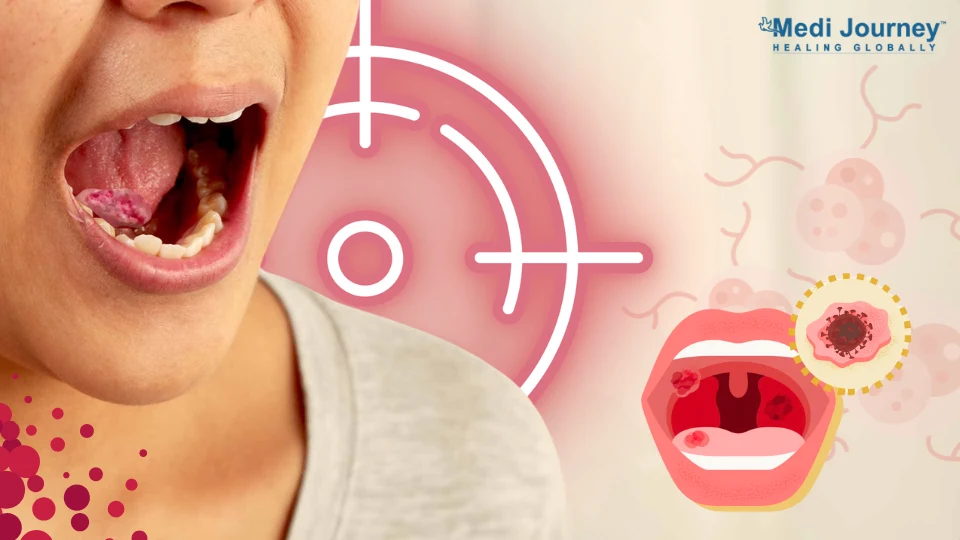
Facing a diagnosis of mouth cancer is a life-altering event, but choosing the right destination for treatment can pave the way for a hopeful recovery. India stands out as a global leader, offering a powerful combination of advanced, affordable mouth cancer treatment in India. For international patients, this means access to state-of-the-art hospitals, renowned surgeons, and comprehensive care, all at a fraction of the cost in other developed nations, making it a truly compelling choice for your healing journey.
Fill up the form and get assured assitance within 24 hrs!
|
Category |
Details |
|
Average Cost in India |
Ranges from INR 1,50,000 to INR 6,00,000 (approximately USD 1,800 to USD 7,200). This can vary significantly based on the stage and type of treatment required. |
|
Cost in Other Countries |
USA: USD 50,000 to USD 150,000+. Surgery alone can range from USD 20,000 to USD 50,000. UK: Starts from approximately USD 8,250 and can go much higher Singapore: Starts from approximately USD 8,250 |
|
Top Hospitals |
Medanta – The Medicity, Gurgaon Apollo Cancer Centre, Chennai Max Healthcare, New Delhi Fortis Memorial Research Institute, Gurgaon Indraprastha Apollo Hospital, New Delhi BLK-Max Super Specialty Hospital, New Delhi Artemis Hospital, Gurugram HCG Cancer Centre, Kolkata Dharamshila Narayana Superspecialty Hospital, New Delhi Amrita Hospital, Kochi |
|
Hospital Stay |
Typically, 7-9 days for surgical procedures |
|
Total Duration |
Around 18-21 days or more, depending on the specific treatment plan |
|
Success Rate |
The 5-year survival rate for early-stage mouth cancers (Stage I and II) is as high as 80-90%. For advanced stages, it is around 40-50%. The overall success rate for mouth cancer surgery in India is often cited between 70-85%. |
|
Best Surgeons |
Dr. Harit Chaturvedi – Max Healthcare, New Delhi Dr. Prof. Suresh H. Advani – Nanavati Super Speciality Hospital, Mumbai Dr. Deepak Sarin – Medanta – The Medicity, Gurgaon Dr. Vinod Raina – Fortis Memorial Research Institute, Gurgaon Dr. Surender Kumar Dabas – BLK-Max Super Speciality Hospital, New Delhi Dr. Bhawna Sirohi – Apollo Proton Cancer Centre, Chennai Dr. Biswajyoti Hazarika – Artemis Hospital, Gurugram Dr. Anil Kumar Anand – Dharamshila Narayana Superspeciality Hospital, New Delhi Dr. Rajan Arora – Indraprastha Apollo Hospital, New Delhi Dr. Kanika Sharma – HCG Cancer Centre, Kolkata |
Get help choosing the best doctor and hospital for your care.
Mouth cancer, also referred to as oral cancer, is a type of head and neck cancer that originates in the tissues of the mouth or throat. It can develop in various parts of the oral cavity, including the lips, tongue, gums, the inner lining of the cheeks, the roof of the mouth (palate), and the floor of the mouth.
Most mouth cancers are squamous cell carcinomas, which begin in the flat, thin cells that line the lips and the inside of the mouth. If not diagnosed and treated early, it can be life-threatening.
Early detection is crucial for successful treatment. Being aware of the early signs can make a significant difference. The most common symptom is a sore or ulcer in the mouth or on the lip that does not heal.
Other common signs and symptoms include:
Get help choosing the best doctor and hospital for your care.
The stage of mouth cancer describes its size and whether it has spread. Staging is crucial for planning the most effective treatment. There are five stages, from 0 to 4.
Mouth cancer develops when cells in the mouth or on the lips develop changes (mutations) in their DNA. While the exact cause isn't always clear, several factors increase the risk:
Get help choosing the best doctor and hospital for your care.
The diagnostic process of mouth cancer usually starts with a physical examination by a doctor or dentist to check for any anomalies in the mouth. If a suspicious area is identified, a biopsy is performed. This procedure involves taking a small tissue sample for laboratory analysis to confirm the presence of cancer cells.
If cancer is confirmed, further tests are conducted to ascertain the stage of the cancer. These may include:
Physicians use the TNM system to stage mouth cancer, providing a detailed description of the tumor's extent.
The combination of the T, N, and M values determines the cancer's overall stage.
The treatment of mouth cancer in India is not a one-size-fits-all approach. A multidisciplinary team of surgical, medical, and radiation oncologists collaborates to create a personalized treatment plan based on the cancer's type, location, stage, and the patient's overall health. The primary goal is to eradicate the tumor while preserving critical functions like speech, swallowing, and appearance.
The main types of treatment include:
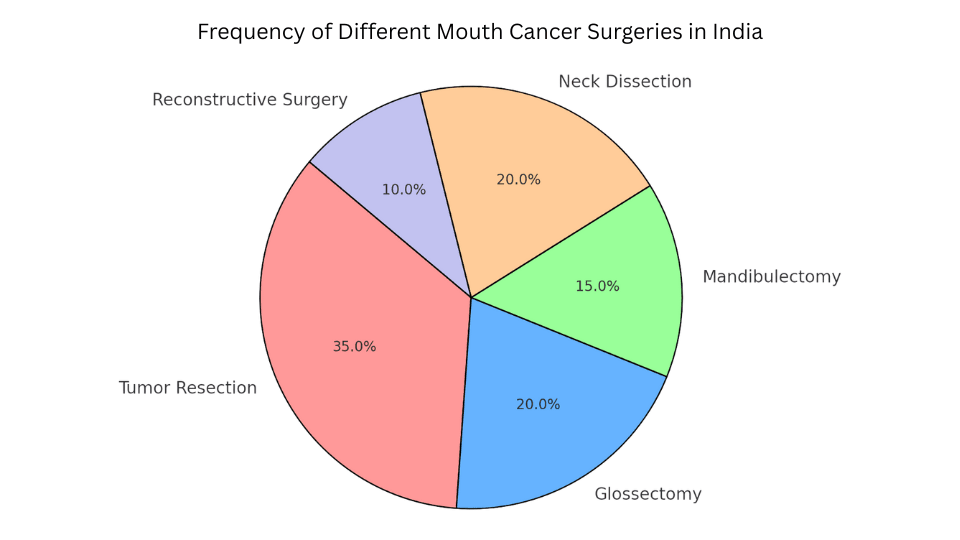
Mouth cancer surgery in India is the cornerstone of treatment, especially for localized tumors. The objective is the complete removal of the cancerous tumor along with a margin of healthy tissue to prevent recurrence. The complexity of the surgery depends on the tumor's size and spread.
The chart below shows the relative frequency of different surgical procedures performed for mouth cancer in India.
Radiation therapy uses high-energy rays to destroy cancer cells. It can be used as a primary treatment or after surgery to eliminate any remaining cancer cells. India's top hospitals offer advanced radiation techniques:
Chemotherapy utilizes powerful drugs to kill cancer cells throughout the body. It is often used in combination with radiation (chemoradiation) for advanced-stage cancers or when the cancer has spread to other parts of the body. It can be administered before surgery to shrink tumors or after surgery to kill any remaining cancer cells.
India's leading cancer centers are at the forefront of adopting newer, more precise treatments:
The approach to the treatment of mouth cancer in India is highly dependent on the stage of the disease at diagnosis.
Get help choosing the best doctor and hospital for your care.
The cost of mouth cancer treatment in India is substantially lower than in many Western nations, without any compromise on the quality of care. The overall cost can range from INR 1,50,000 to INR 6,00,000 (approximately USD 1,800 to USD 7,200), but can vary depending on the complexity of the case and the required treatments. This affordability makes India an attractive destination for a mouth cancer treatment package for international patients.
Here is a comparative table of the estimated cost of mouth cancer treatment in various major Indian cities:
|
City |
Cost Range (INR) |
Cost Range (USD) |
|
Delhi |
INR 2,50,000 – INR 6,88,001 |
USD 3,000 – USD 8,256 |
|
Mumbai |
INR 2,80,000 – INR 7,91,201 |
USD 3,360 – USD 9,494 |
|
Chennai |
INR 1,60,000 – INR 7,36,161 |
USD 1,920 – USD 8,834 |
|
Bangalore |
INR 2,50,000 – INR 7,56,801 |
USD 3,000 – USD 9,082 |
|
Kolkata |
INR 3,00,000 – INR 6,00,000 |
USD 3,600 – USD 7,200 |
Note: The USD conversions are approximate and based on the current exchange rate. Actual costs may vary.
India is home to some of the best mouth cancer hospitals in India, recognized for their excellence by national and international accreditation bodies like JCI and NABH. These facilities are equipped with advanced diagnostic and treatment technologies, ensuring world-class care for patients. Each hospital is staffed with the best surgeon for mouth cancer treatment in India, offering exceptional expertise, personalized treatment plans, and a compassionate approach to recovery.
Get help choosing the best doctor and hospital for your care.
There are several compelling reasons for choosing India for your mouth cancer treatment:
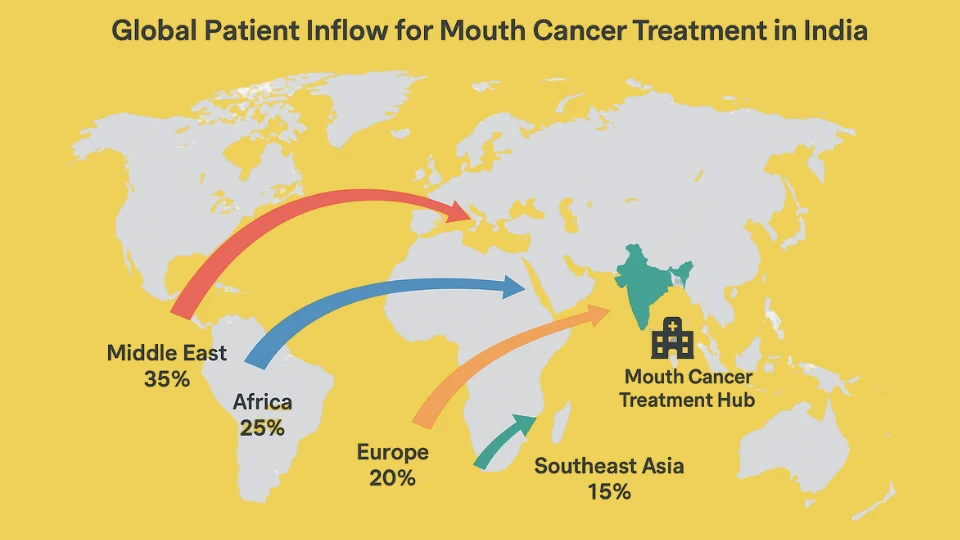
The map below shows the international patient flow from different regions, reflecting India’s reputation for world-class care, advanced technology, and affordable treatment.
In conclusion, with a focus on outcomes, innovation, and holistic well-being, India is emerging as a leading choice for the treatment of mouth cancer worldwide.
A: The extent of scarring after a mouth cancer treatment in India depends on the location and size of the tumor and the type of surgery performed. Surgeons in India always strive to minimize scarring and utilize reconstruction techniques to achieve the best possible cosmetic outcome.
A: Dry mouth is a common side effect of radiation to the head and neck. The medical team in India can recommend various strategies to manage this, including staying well-hydrated, using saliva substitutes, and certain medications like amifostine.
A: Your Indian medical team will provide a detailed follow-up plan after the treatment of your mouth cancer. This will typically involve regular check-ups with an oncologist in your home country and may include imaging scans or other tests to monitor for any signs of recurrence.
A: Recovery can take several weeks. You will likely spend a few days in the hospital after surgery. The full recovery period will depend on the complexity of the surgery and your overall health.
A: The success rate of mouth cancer surgery in India is generally high, with overall success rates often cited between 70-85%. For early-stage cancers, the 5-year survival rate can be as high as 80-90%.
A: The impact on speech depends on the location and extent of the surgery, particularly if it involves the tongue. Speech therapy is a crucial part of rehabilitation and can help most patients regain their ability to speak clearly.
A: When choosing a hospital for your mouth cancer treatment in India, consider factors such as the hospital's accreditation (JCI, NABH), the experience of the oncologists and surgeons, the available technology (robotic surgery, proton therapy), and patient reviews.
A: Both Proton Therapy and IMRT are advanced forms of radiation therapy. Proton therapy can sometimes be more precise in targeting the tumor and may spare more healthy tissue, but the choice between them depends on the specific details of your cancer. Your oncologist will recommend the best option for you.
A: In some instances, especially for very early-stage cancers or for patients who are not suitable candidates for surgery, radiation therapy with or without chemotherapy may be used as the primary treatment. However, surgery remains the most common and often the most effective treatment for mouth cancer.
Fill up the form and get assured assitance within 24 hrs!
B.Sc in Media Science from NSHM Knowledge Campus, Kolkata, 2019-2022
Suryani Dutta is an experienced healthcare content writer with 4+ years of experience creating patient-centric healthcare content. She has developed over 2,000 blogs and web pages, 2,000+ social media creatives, 200+ video scripts, and hundreds of SEO-opt
Dr. Vivek Gupta is an experienced Surgical Oncologist with over 16 years of practice....
Senior Consultant
Medical Oncologist
Nanavati Max Super Speciality Hospital Mumbai
WhatsApp UsSenior Director
Gynecologist and Obstetrician, IVF Specialist
Max Super Speciality Hospital, Shalimar Bagh, New Delhi
WhatsApp UsSenior Director
Gynecologist and Obstetrician, IVF Specialist
Max Smart Super Speciality Hospital, Saket, New Delhi
WhatsApp UsSenior Director
Gynecologist and Obstetrician
Max Smart Super Speciality Hospital, Saket, New Delhi
WhatsApp UsSenior Director
Gynecologist and Obstetrician
Max Smart Super Speciality Hospital, Saket, New Delhi
WhatsApp UsSenior Director
Gynecologist and Obstetrician
Max Smart Super Speciality Hospital, Saket, New Delhi
WhatsApp UsThe Art of Effective Communication
04 February,2026
Read More
02 February,2026
Read More
27 January,2026
Read More
20 January,2026
Read More
Trusted by Patients
"I am Asim from Bangladesh and was looking for treatment in India for neuro. I visited many websites to get the complete information regarding the treatment but I was not satisfied as I was getting confused. In the meanwhile, one of my friends suggested I seek help from Medi Journey as he experienced his medical journey very smoothly and was satisfied with it. They have filtered the top 10 doctors as per experience, the success rate of surgery & profile, so it helps us to choose the best treatment in India. "
"For my knee surgery, Medi Journey guided me to BLK Hospital where I received exceptional care. The team's support and the expertise at BLK Hospital exceeded my expectations. Thank you Medi Journey for making my medical journey stress-free. "
"I came from Iraq for my granddaughter's eye surgery in India facilitated by Medi Journey, due to critical cases they advised us to get a second opinion from the different hospitals before going to surgery. Finally, we went to Fortis Escort Hospital, which helped us to get more confidence for diagnosis. Fortis Escort Hospital has the best eye surgeon team with the latest instruments. Thanks to all team members for providing a high-quality treatment in India at an affordable cost. "
"I came for my hair transplant in India, before coming I was so confused about choosing the best clinic and surgeon for me. But thanks to God one of my friends had a hair transplant in India through Medi Journey. He recommended me to go with them. I am completely happy with my experience with them. They were always very fast in their responses to me. the success rate of my hair transplant surgery is 100%."
"Artemis Hospital, suggested by Medi Journey, turned out to be a great choice for my treatment. The personalized assistance and medical care were exceptional. I'm grateful to Medi Journey for guiding me to a hospital that perfectly matched my needs. Highly recommended! "
"I came from Afghanistan for my treatment in India at Jaypee Hospital, Noida. I had a fantastic experience with Medi Journey. Kudos to them for their incredible support during my medical journey. They not only took care of all the logistics but also connected me with a fantastic healthcare team. Efficient, caring, and highly recommended for a hassle-free medical tourism experience."
"I am Adam from Kano, Nigeria, one of my friends from Nigeria was facilitated by Medi Journey, and he recommended us to go with them. I sent my all reports to them and within 48 hours they reverted with 4 options from different hospitals. They helped me to get a Visa letter from the hospital, arrange pick-up from the airport, and book a hotel for me. Their team is very honest and throughout our stay in India they are with us they are caring for us like his family members. BLK Hospital is the best hospital in India with a top surgical oncologist surgeon team, a very advanced OT, and a Radiotherapy department. I wish more success to Medi Journey. "
"Great experience at the Max Hospital for my spine surgery and was successfully done. I thank my neurosurgeon and his entire team. I recommended all of my country's people to Medi Journey for treatment in India, they choose the best hospital, the best doctors, and the best cost for patients."
"I came to India from Dhaka, Bangladesh for my father-in-law's cardiac surgery at Fortis Hospital. I was confused about choosing the best surgeon for him before coming, but their team helped me to choose the best hospital and best cardiac surgeon in India with very good cost and 100% success rate of surgery. I am very happy with the services, really they make my journey so comfortable that make me feel at home. Thanks again and I like people to choose "Medi Journey" as your travel guide. "
"I am Mohammad from Bangladesh came to India for my general health checkup. Medi Journey offers me the complete package including Pick-up from the airport, hotel services, and 24-hour assistance. They guide you to choose the best hospital in India, the best cost of treatment with top-most doctors and give you complete information about hotel booking, and pick-up from the airport before coming to India They have the best team to help. Always choose Medi Journey for your treatment in India."